
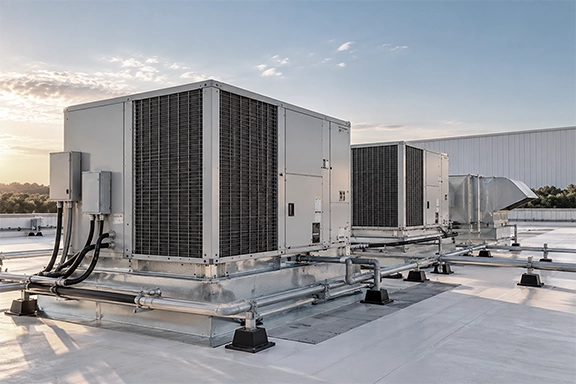
Another repair bill arrives, and the same question comes up: should you keep fixing the equipment or invest in something better?
For a warehouse manager, that decision affects more than maintenance costs. Unreliable cooling can disrupt operations, create uncomfortable working conditions, and put temperature-sensitive inventory at risk. But replacing equipment without addressing the underlying problem can leave you with the same complaints.
The right choice depends on equipment condition, repair history, storage requirements, and how the facility operates today. Here is how to compare your options.
When Is HVAC Repair the Right Choice?
Repair may make sense when the problem is isolated and the equipment remains in otherwise dependable condition.
A failed electrical component, faulty sensor, or blocked condensate drain does not automatically justify replacing an entire unit. The more useful question is whether correcting that fault will restore reliable operation.
Repair deserves consideration when:
Previous breakdowns have been infrequent.
Major components remain in good condition.
Replacement parts are available within an acceptable timeframe.
The equipment previously maintained the required conditions.
The proposed work addresses a diagnosed cause.
Ask your HVAC company to explain what failed, why it failed, and whether related problems could cause another breakdown.
Maintenance history also matters. Restricted filters, dirty coils, and neglected drains can affect performance. Our warehouse HVAC maintenance guide explains the routine checks that support dependable operation.
When Can an Upgrade Solve the Problem?
Sometimes the cooling equipment still works, but the facility has changed around it.
New racking, enclosed offices, longer operating hours, or different inventory can create demands that were not present when the equipment was installed. In these situations, a targeted upgrade may be worth evaluating before full replacement.
Airflow and Temperature Distribution
If one storage aisle stays warm while another is comfortable, the problem may involve blocked outlets, duct leakage, or inadequate return paths.
Correcting distribution can be more appropriate than adding capacity. Fans may help mix air, but they do not remove heat or moisture.
Our warehouse temperature control article covers common causes of uneven conditions.
Controls and Humidity Management
Thermostat placement, operating schedules, and sensor coverage can all affect performance. Compatible control upgrades may help equipment respond more accurately to actual storage conditions.
Moisture problems require their own assessment. A space can feel cool while indoor humidity remains unsuitable for stored materials. Review door activity, ventilation, drainage, and moisture-removal capacity before assuming a lower thermostat setting will solve the issue.
See our warehouse humidity control guide for more detail.
Cooling a Separate Area
A mini split may be an option for an enclosed office or another space with different operating hours. Its suitability depends on the load, layout, electrical supply, and ventilation requirements.
Adding a mini split to one room does not resolve ventilation or cooling problems throughout a large open storage floor.
When Should You Consider System Replacement?
Replacement becomes more compelling when reliability, repair costs, and operating requirements point in the same direction.
Warning signs include:
Repeated failures that interrupt operations.
Major component damage alongside other signs of deterioration.
Recurring refrigerant leaks.
Parts availability that creates unacceptable downtime.
Inability to maintain required conditions after maintenance and distribution problems have been addressed.
Substantial changes in how the building is used.
Age is one factor, but it should not make the decision by itself. An older unit with a documented maintenance history may present a different risk than neglected equipment of the same age.
Likewise, one expensive repair does not automatically settle the question. Compare the likely reliability after repair with the cost and benefits of replacement.
Does More Heat Mean You Need More Tons?
Summer heat can expose performance problems, but a higher-capacity replacement is not automatically the answer.
A ton describes cooling capacity. Choosing the appropriate size requires evaluating roof exposure, insulation, loading-door activity, ventilation, occupancy, and heat from equipment.
Simply matching the old nameplate may overlook changes in demand. Going larger without a load assessment can also create problems: oversized equipment may cycle excessively and provide poor humidity removal.
Ask the contractor how the proposed capacity was selected and whether distribution improvements are included. Equipment sizing and installation quality both affect the result.
Should You Choose a Heat Pump?
A heat pump can provide both heating and cooling, making it an option when evaluating replacement equipment for a Central Florida facility.
Whether it fits your operation depends on the required capacity, electrical infrastructure, operating schedule, and existing equipment configuration. A commercial rooftop package or another arrangement may suit the application.
The proposal should explain why the recommended equipment fits your needs. Product type alone does not establish suitability.
Facilities storing refrigerated or frozen goods require a separate assessment. General air conditioning should not substitute for refrigeration designed around product-specific storage temperatures.
How Should You Compare Repair and Installation Quotes?
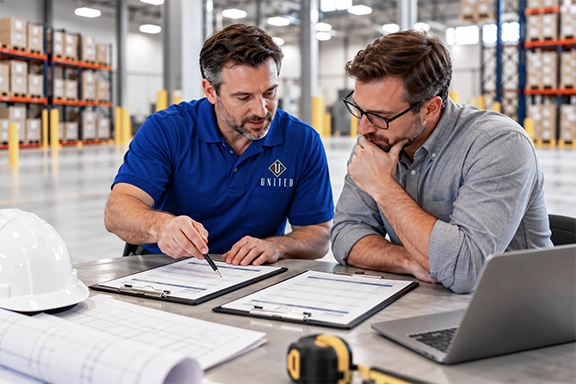
Start by asking each company to address the same operating problem and required outcome. Then compare more than the initial price.
Share previous recurring fault reports, temperature readings, and storage requirements. This gives the contractor a clearer basis for comparing options.
A planned replacement may also allow your business to coordinate access and scheduling before an emergency forces the decision.
Equipment and Distribution Should Be Evaluated Together
United’s 20-ton replacement at an Ocala fitness facility combined replacement equipment with ductwork corrections to address uneven cooling.
Although this was a fitness facility rather than a storage project, it illustrates an important buying consideration: new equipment and effective air delivery need to work together.
A proposal should explain how the recommended work addresses your specific symptoms.
Discuss Your Options With United
United Refrigeration, Heating & Air provides storage facility HVAC services, including maintenance, repairs, equipment replacement, and climate-control improvements.
Whether you need a targeted repair or a broader upgrade, start with an assessment of equipment condition and operating requirements.
Contact United to discuss repair, replacement, or upgrade options for your Central Florida facility.