
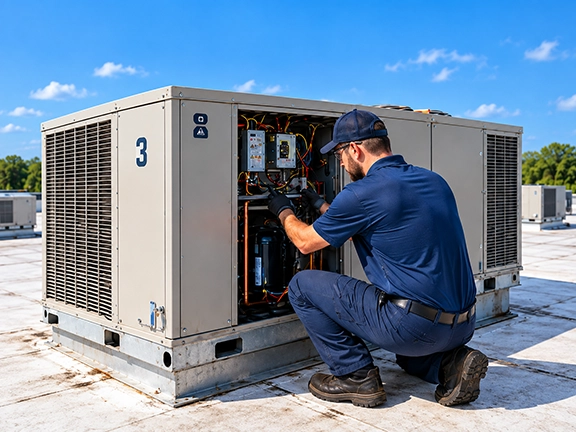
A warm loading area, a leaking air handler, or a storage zone that never reaches its temperature setting can interrupt an otherwise productive day. When equipment problems keep returning, your team spends more time responding to complaints and less time managing the operation.
Warehouse HVAC maintenance helps you identify developing problems, plan service, and keep conditions more consistent. For Central Florida facilities, that means considering long cooling seasons, moisture, dust, and the demands of daily shipping and receiving.
Whether you manage a smaller storage building in Ocala or a large distribution center, your service plan should reflect how the building actually operates.
How Often Should Warehouse HVAC Systems Be Serviced?
The right schedule depends on equipment requirements, operating hours, environmental conditions, and what you store. A lightly used building and a facility operating multiple shifts may need different service intervals.
United offers three options through its commercial HVAC maintenance plans:
- Two visits annually: Full preventive service in spring and fall.
- Four visits annually: Two full visits plus two basic visits, scheduled quarterly.
- Six visits annually: Two full visits plus four basic visits, scheduled every other month.
The appropriate frequency should follow an equipment assessment and manufacturer guidance. Filter changes may be needed between visits when dust loading is high. Review the schedule whenever operating hours, inventory, or building use changes.
What Makes Warehouse Environments Different?
Warehouses present unique challenges because conditions can vary significantly across one property. High ceilings, tall racks, loading docks, and enclosed offices create different demands on heating and cooling equipment.
For example, a thermostat near an office corridor may not represent conditions around stored inventory. A new rack layout may obstruct air distribution. Longer loading hours may bring additional heat and moisture inside.
In a large warehouse, start by identifying which equipment serves each zone. Record where temperature complaints occur and whether they follow deliveries, shift changes, or afternoon heat. These details help technicians investigate the actual problem.
Temperature-controlled storage also differs from refrigerated or frozen storage. Facilities with cold rooms need refrigeration service appropriate to those systems in addition to building comfort equipment.
A Practical Warehouse HVAC Maintenance Checklist
Maintenance checklists should match the installed equipment. A professional inspection commonly addresses these areas, also discussed in United’s facility maintenance guidance:
- Filters and airflow: Check filter condition, returns, supply outlets, and signs of restricted air movement.
- Coil condition: Evaluate evaporator and condenser surfaces for buildup that interferes with heat transfer.
- Condensate drainage: Check pans, drains, and associated safety devices for developing water problems.
- Electrical and moving components: Inspect connections, motors, belts, and wear items where applicable.
- Refrigerant performance: Evaluate operating conditions and investigate evidence of an incorrect charge or leak.
- Thermostat and controls: Verify operation and review settings against the areas being served.
- Equipment condition: Document unusual noise, vibration, deteriorating components, and recurring faults.
Ask your provider to explain which tasks belong to a full service visit and which are included in intermediate checks. That makes the scope easier to compare and budget.
Which HVAC Problems Need Attention Between Visits?
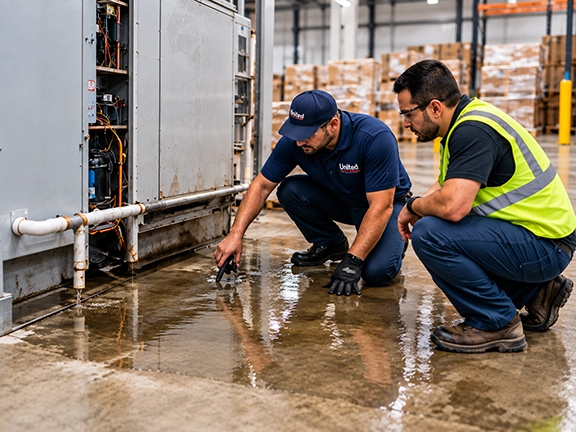
Do not wait for the next appointment when conditions are deteriorating. Report these changes promptly:
- Persistent hot or cold spots.
- Water around equipment or repeated drain shutdowns.
- Unusual noises, vibration, or frequent starts and stops.
- Damp packaging, condensation, or musty odors.
- Longer operating times or unexplained increases in energy consumption.
United’s storage facility services address temperature inconsistency, humidity, ventilation, and related equipment problems. Providing the location, timing, and affected equipment helps narrow the investigation.
Humidity deserves particular attention: reaching the temperature setting does not establish that stored products have suitable moisture conditions. Record temperature and humidity together when moisture problems develop.
How Can Regular Maintenance Support Energy Efficiency?
Dirty coils, restricted airflow, and incorrect operating schedules can create energy waste. Addressing those issues helps equipment perform as intended without relying on increasingly low thermostat settings.
Maintenance cannot correct every design or capacity problem, however. If your building has expanded, inventory requirements have changed, or equipment repeatedly struggles, a broader assessment may be appropriate.
United’s commercial HVAC services include repairs, rooftop unit replacement, installation, control solutions, and ventilation upgrades. That gives facility managers options when routine service alone cannot resolve a recurring problem.
Reliable conditions also support worker comfort and productivity. Filtration, moisture management, and outdoor air requirements should be considered together when evaluating indoor air quality.
If routine service no longer resolves recurring problems, our guide explains when to repair, replace, or upgrade your warehouse HVAC system and what to consider before approving additional work.
How Should You Plan Service Across Multiple Units?
For facilities with several systems, an equipment list is as valuable as a calendar. Identify each unit, the area it serves, its service history, and any outstanding recommendations.
Plan access around shipping schedules, forklift routes, and areas with sensitive inventory. Discuss whether work can be staged so an equipment shutdown causes less disruption to warehouse operations.
United provides written inspection reports and maintenance tracking, helping you distinguish immediate repairs from items to monitor or budget for. Its plans include advance notice of visits, member scheduling priority, and discounted labor rates. Repairs require your approval. Review United’s maintenance options.
Between visits, keep equipment access clear and encourage staff to report changes early. A consistent log helps warehouse managers recognize repeated problems instead of treating every call as an isolated event.
Schedule Warehouse HVAC Service in Central Florida
United Refrigeration, Heating & Air helps commercial facilities in Ocala and surrounding Central Florida communities maintain, repair, and replace their equipment. Support includes rooftop and split systems, air handlers, controls, and 24/7 emergency service. Explore available maintenance coverage.
If your facility is dealing with recurring repairs, uneven conditions, or an inconsistent service schedule, start with an assessment. Contact United to discuss your equipment, operating requirements, and a maintenance plan that fits your property.