

The thermostat shows a comfortable temperature, but dining chairs feel clammy. Windows collect moisture, and the locker rooms stay damp long after the morning rush.
Clubhouse humidity problems can continue even when the cooling equipment runs. Lowering the temperature may leave members feeling cold without addressing the moisture problem.
For country clubs in Ocala, The Villages, and Central Florida, controlling moisture starts with identifying what enters the building, what activities generate it, and how effectively your equipment removes it.
Why Can Your Clubhouse Feel Cool but Humid?
Temperature and moisture are related, but they are different measurements.
Relative humidity describes how close the air is to saturation at its current temperature. A thermostat that measures temperature alone cannot tell you whether indoor humidity is under control.
Your equipment must handle both heat and moisture. During mild or rainy weather, the building may need less cooling while still needing moisture removal. Short operating cycles can leave the space cool but damp.
The practical question is whether your building removes moisture as quickly as people, activities, and outdoor conditions introduce it.
What Causes High Indoor Humidity in a Clubhouse?
Frequent Door Openings and Humid Outdoor Air
Patio access, deliveries, and doors propped open during events allow moist air into conditioned spaces.
A dining room beside a busy terrace may experience different conditions from an interior lounge. Worn door seals or openings around the building can add to that load.
Opening windows is not automatically helpful. When outdoor air contains more moisture, it can make indoor conditions worse.
Kitchens, Locker Rooms, and Busy Events
Cooking, showers, cleaning, and occupants add moisture. A packed banquet creates a different load from an empty room.
Exhaust fans need appropriate replacement air. If exhaust removes more air than the building’s systems replace, humid air may be drawn through unintended openings.
Report whether dampness increases during meal preparation, after showers, or during events. Those patterns help narrow the investigation.
Short Cooling Cycles or Equipment Problems
Oversized equipment may reach the temperature setting quickly without adequately controlling moisture. Dirty components, unsuitable operating settings, or equipment faults can also affect performance.
A service assessment should check operation and controls before recommending replacement. Ask whether the HVAC system is meeting both cooling and moisture-removal needs.
Building Leaks and Insulation Problems
Not every damp area comes from moisture in the air. A roof leak, plumbing fault, or overflowing drain pan may be responsible.
Missing or damaged insulation around cold ducts and pipes can also allow water to collect on their surfaces.
Where construction warrants it, an assessment may include a crawl space or vapor barrier. Adding insulation or sealing materials without understanding how the assembly dries can leave the original problem unresolved.
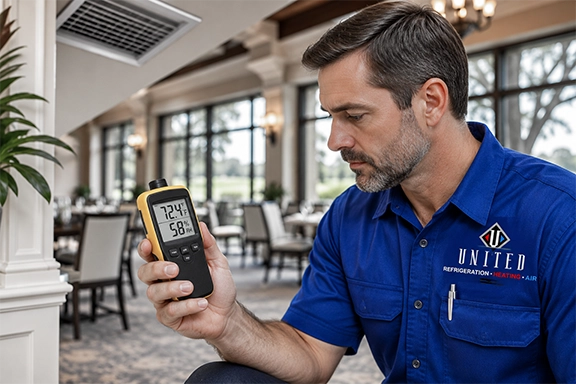
How Can You Measure the Humidity Level and Find the Source?
Start with measurements rather than repeated thermostat adjustments.
Use reliable sensors to record temperature and relative humidity in affected rooms. Keep sensors away from direct sunlight, supply grilles, and shower spray.
Your team should record:
- Conditions before, during, and after events.
- Weather and exterior door activity.
- Equipment schedules.
- Locations of odors, damp surfaces, or visible water.
- Whether the problem continues overnight or when rooms are empty.
A humidity sensor measures conditions in the indoor air. A moisture meter helps investigate moisture content in building materials; the tools answer different questions.
Dew point also matters. It is the temperature at which water vapor begins turning into liquid. A surface below that temperature can develop condensation, even when the room itself does not feel especially warm.
Will a Dehumidifier Solve Clubhouse Humidity Problems?
A dehumidifier may help when your building needs moisture removal without additional cooling. However, selecting equipment should follow an assessment of the moisture load, existing controls, air distribution, and drainage.
A properly sized commercial solution must serve the intended spaces under their actual operating conditions. A portable unit in one room should not be assumed to control humidity throughout a clubhouse.
Dehumidification also does not fix a building leak or replace required ventilation. Addressing those issues remains part of the work.
Ask your service provider to explain why dedicated equipment is recommended, how it will operate with the existing system, and what maintenance it will require. The goal is consistent performance, not simply collecting water in a tank.
How Can You Control Humidity Without Disrupting Club Operations?
Match the corrective work to the cause:
- Address water entry. Arrange appropriate repairs for roof, plumbing, or drainage faults.
- Maintain equipment. Check coils, filters, drain pans, and condensate lines.
- Evaluate exhaust and replacement air together. Include kitchen and locker-room operating schedules.
- Review controls. Consider occupied and unoccupied periods rather than only event hours.
- Check cold surfaces. Investigate damaged insulation and recurring wet spots.
EPA’s commercial-building guidance recommends correcting moisture sources, keeping drain pans clear, and performing scheduled inspections.
Coordinate access around dining and activities. United’s commercial HVAC maintenance plans provide scheduled opportunities to inspect equipment and document developing concerns.
After corrections, compare readings under similar operating conditions to confirm improvement.
Frequently Asked Questions About Clubhouse Humidity
What humidity level should a clubhouse maintain?
EPA’s general guidance for schools and commercial buildings recommends keeping relative humidity below 60%, ideally between 30% and 50% where possible. This is a moisture-control guideline, not a single operating specification for every room.
Your service provider should establish an appropriate target based on building conditions and room use. Recurring wet surfaces deserve investigation even when average readings appear acceptable.
Should you open windows to reduce indoor humidity?
Only when outdoor moisture conditions support that approach. On warm, humid days, open windows can introduce additional moisture and increase the equipment’s workload. Keep required mechanical fresh-air delivery operating as designed.
Can high humidity affect indoor air quality?
Persistent dampness can create conditions that support mold growth on susceptible materials. Musty odors or visible growth warrant investigation, but an odor alone does not identify the cause. Correcting moisture sources is essential; cooling the room further does not resolve wet materials.
Get Help With Clubhouse Humidity Problems in Central Florida
Your clubhouse should feel comfortable without constant thermostat adjustments or recurring dampness.
United Refrigeration, Heating & Air provides country club HVAC and refrigeration services across Ocala, The Villages, and surrounding Central Florida communities.