
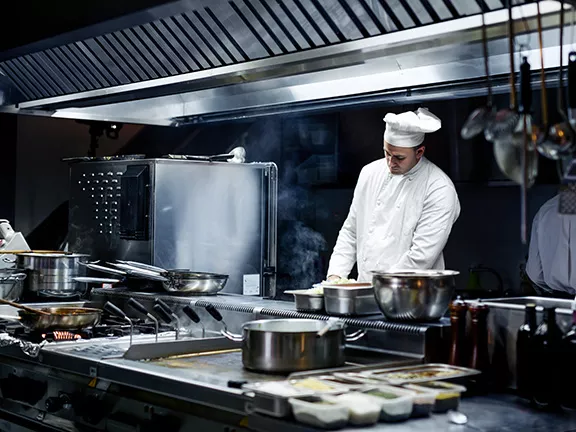
If your restaurant kitchen feels like an oven, even though the dining room is comfortable and the air conditioner appears to be working, you’re not alone. Excessive heat is one of the most common complaints in a commercial kitchen, especially during Florida’s long, hot summers.
Many restaurant owners assume the HVAC system has failed when the kitchen becomes unbearable. In reality, the air conditioner is often only one piece of the puzzle. Poor ventilation, inadequate airflow, an undersized HVAC system, failing exhaust fans, or problems with the make-up air system can all contribute to rising kitchen temperatures.
Understanding what’s causing the problem can help protect your employees, improve operational efficiency, lower energy costs, and create a safer, more productive workplace.
A Hot Restaurant Kitchen Affects More Than Employee Comfort
A hot kitchen is more than an inconvenience. It can affect every part of your operation.
When chefs and line cooks spend hours at a time working near a grill, fryer, ovens, and other cooking equipment, temperatures can easily climb well above the dining room. In some cooking areas, temperatures may exceed 95 degrees, and workers standing near equipment may experience localized temperatures approaching 120F.
These high temperatures can contribute to:
- Heat stress and heat exhaustion
- Fatigue and reduced productivity
- Employees feeling dizzy or dehydrated
- Lower morale among kitchen staff
- Slower food preparation
- Higher employee turnover
- Poorer customer service
Maintaining an efficient kitchen environment isn’t just about comfort—it’s part of creating a safe working environment that supports your staff and your business.
While OSHA does not establish one specific indoor temperature for every workplace, employers are expected to provide working conditions that reduce heat-related hazards and help ensure compliance with applicable health and safety standards and regulations regarding employee safety.
For restaurant owners, that begins with understanding why the kitchen is getting so hot in the first place.
Your HVAC System May Be Working Properly
One of the biggest misconceptions in the hospitality industry is that a hot restaurant kitchen automatically means the air conditioner has failed.
In many cases, the HVAC system is actually working properly.
A commercial kitchen generates an incredible amount of heat. Between the grill, fryer, ovens, steam equipment, dishwashers, and other cooking appliances, your cooling system is constantly fighting against new sources of heat.
The goal of a proper HVAC design isn’t simply to produce cold air. It’s to manage temperature control, maintain healthy air quality, and move the right amount of air throughout the building while working together with the ventilation system.
If one part of that system falls behind, the rest of the building can suffer.
The Four Most Common Reasons Restaurant Kitchens Become Too Hot
1. Your Kitchen Exhaust System Isn't Removing Enough Heat
Every restaurant hood is designed to capture smoke, grease, steam, and hot air produced by cooking equipment.
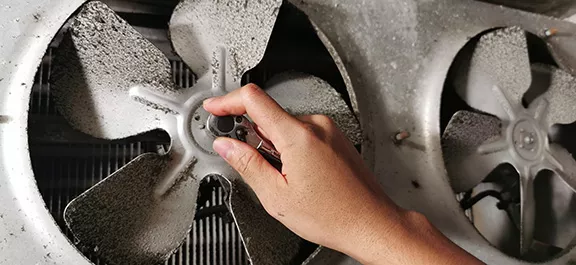
When hood systems, kitchen exhaust, or exhaust fans aren’t performing properly, heat remains trapped inside the cooking area instead of being exhausted outside.
The result is a hotter kitchen environment, increased humidity, and uncomfortable working conditions for your staff.
A professional walkthrough can identify problems such as dirty exhaust components, failing fan motors, damaged ductwork, or insufficient exhaust capacity before they affect the entire operation.
2. Your Make-Up Air System Isn't Keeping Up
Many restaurant owners have never heard of make-up air, yet it’s one of the most important parts of a comfortable commercial kitchen.
Every time your kitchen exhaust system removes air from the building, fresh air has to replace it.
If that replacement air isn’t supplied correctly, the building develops negative pressure. Instead of maintaining balanced air movement, the exhaust system begins pulling air through doors, windows, and other openings.
This reduces airflow, makes the air conditioner work harder, and can actually blow hot air into occupied spaces.
The result is often a hot kitchen, higher energy consumption, and employees wondering why the AC never seems to catch up.
3. Your HVAC Equipment May Be Undersized
Restaurants change over time.
Maybe you’ve added another fryer, expanded your menu, installed new cooking equipment, or remodeled the cooking area.
What was once an adequate cooling system may now be undersized for the amount of heat your business generates.
Instead of replacing equipment immediately, a qualified commercial HVAC contractor should evaluate the entire building to determine whether the issue is equipment size, airflow, ventilation, or system balance.
Replacing an air conditioner without addressing the real problem often leads to disappointing HVAC performance and unnecessary expense.
4. Poor Air Distribution Leaves Heat Trapped
Even if your cooling system is producing plenty of conditioned air, it still has to reach the people who need it.
Blocked registers, poorly placed supply vents, damaged ductwork, or older wall mounted equipment can prevent cool air from reaching busy workstations.
Good air movement helps remove heat generated by cooking equipment and keeps employees more comfortable throughout their shift.
A properly designed HVAC and ventilation system distributes conditioned air where it’s needed while removing excess heat from the kitchen instead of allowing it to build throughout the day.
Excess Heat Can Affect More Than Your Employees
Many restaurant owners don’t realize that excessive kitchen heat can also affect other critical equipment.
When ambient temperatures rise, your walk-in cooler or freezer, reach-in cooler, beverage coolers, and even your refrigerator have to work harder to maintain safe temperatures. Ice machines can produce less ice, compressors run longer, and your cooling system uses more energy.
Over time, that additional workload can increase wear on your commercial refrigeration equipment, reduce energy efficiency, and raise operating costs. If your kitchen is consistently hotter than it should be, addressing the underlying HVAC and ventilation issues may also help extend the life of your refrigeration systems while improving energy savings.
Warning Signs Your Kitchen Ventilation System Needs Attention
Most restaurant owners don’t think about their ventilation system until employees start complaining or equipment begins struggling to keep up. Instead of waiting for an unexpected breakdown, use this simple checklist to spot problems before they affect your operation.
You may need professional service if you notice:
- The kitchen feels much hotter than the dining room.
- Employees complain about excessive heat or feeling dizzy during busy shifts.
- Smoke or cooking odors linger longer than they should.
- Grease builds up more quickly around the restaurant hood.
- The HVAC system seems to run constantly.
- Utility bills continue to increase.
- Your walk-in cooler, reach-in cooler, freezer, or ice machine seems to be working harder than normal.
- Certain areas of the kitchen never seem to cool down.
- Air coming from a vent doesn’t feel cool or there is very little air movement.
- Staff avoid certain workstations because of excessive heat.
If several of these warning signs sound familiar, it’s time for a professional inspection before a small problem affects your entire operation.
A Professional Walkthrough Can Identify the Real Problem
Many HVAC contractors immediately recommend replacing the air conditioner.
At United Refrigeration, Heating & Air, we believe that’s only part of the conversation.
A professional walkthrough evaluates the complete system to identify what’s actually causing excessive heat.
Our technicians look at:
- Overall HVAC performance
- Kitchen exhaust performance
- Make-up air operation
- Hood systems and exhaust fans
- Airflow throughout the building
- Indoor temperature differences
- Air quality
- Equipment sizing
- Energy consumption
- Refrigeration performance
- Employee work areas
By evaluating the entire system instead of focusing on a single piece of equipment, we can often identify opportunities to improve comfort, increase energy savings, and restore a more efficient kitchen environment without recommending unnecessary equipment replacement.
Keep Your Kitchen Running as Efficiently as Your Team
A comfortable restaurant kitchen doesn’t happen by accident. It requires the right balance of HVAC performance, ventilation, kitchen exhaust, make-up air, and commercial refrigeration working together as one system.
If your chef, line cooks, or other kitchen workers are constantly battling excessive heat, don’t assume replacing the air conditioner is the only solution. The issue may involve your exhaust system, airflow, equipment sizing, or another component affecting the entire kitchen.
At United Refrigeration, Heating & Air, we help restaurants, fast-food locations, country clubs, medical facilities, assisted living communities, and other food-service establishments solve complex comfort and refrigeration challenges. Whether you need service for your HVAC system, make-up air unit, kitchen exhaust, walk-in cooler or freezer, reach-in cooler, or commercial ice machine, our experienced technicians understand how each system works together to support your operation.
Don’t wait until excessive heat affects your employees, your customers, or your equipment.
Call United Refrigeration, Heating & Air today to schedule a commercial HVAC and kitchen ventilation evaluation.
While you’re at it, ask about our Commercial Maintenance Plans to help reduce emergency repairs, improve energy performance, and protect the equipment your business depends on every day.