
If you’re like many restaurant owners, you’ve probably wondered:
How often should a restaurant HVAC system be serviced?
A restaurant HVAC system operates in one of the most demanding environments of any commercial building. Long operating hours, hot kitchens, ventilation requirements, humidity, airborne cooking particles, and constantly opening exterior doors all force HVAC equipment to work much harder than systems in typical offices or retail spaces.
That’s why we recommend servicing restaurant HVAC systems six times per year—about every other month.
Regular maintenance helps identify small problems before they become expensive repairs while keeping your restaurant comfortable, energy efficient, and operating smoothly throughout the year.
Why Restaurants Need More HVAC Maintenance Than Most Businesses
Every restaurant has unique HVAC challenges.
Unlike many commercial spaces, restaurants must cool both the customer-facing dining area and the much hotter restaurant kitchen while maintaining proper airflow and indoor air quality.
Your HVAC system also works alongside your kitchen hood, kitchen exhaust, and makeup air systems. Every time conditioned air is exhausted from the building, it must be replaced with fresh outdoor air. If these systems aren’t balanced correctly, comfort, efficiency, and air quality can all suffer.
Restaurant HVAC equipment often operates from opening until closing—sometimes even 24 hours a day. That constant workload makes routine maintenance much more important than it is for many other businesses.
Why We Recommend Servicing Restaurant HVAC Systems Six Times Per Year
At United Refrigeration, Heating & Air, we recommend servicing most restaurant HVAC systems every two months.
Six maintenance visits each year allow technicians to identify wear before it leads to unexpected breakdowns.
During a typical maintenance visit, your HVAC contractor can:
- Inspect or replace air filters.
- Clean evaporator and condenser coils.
- Verify thermostat operation.
- Check refrigerant levels.
- Inspect electrical components.
- Clean condensate drains.
- Inspect belts and motors.
- Verify proper airflow and air pressure.
- Evaluate makeup air and ventilation performance.
- Identify developing problems before they require major repairs.
This preventative approach helps maintain reliable heating and cooling, supports energy-efficient HVAC performance, and reduces the likelihood of costly emergency service.
The Hidden HVAC Problem Many Restaurant Owners Never See
Restaurant HVAC systems are exposed to conditions that most commercial buildings never experience.
Grease particles, cooking residue, moisture, airborne flour, and other contaminants are constantly circulating through the restaurant. Over time, these particles can accumulate inside your HVAC equipment, reducing efficiency and increasing wear on critical components.
One of the best examples is flour.
Restaurants that prepare pizza dough, bread, biscuits, pastries, or other baked goods release extremely fine flour particles into the air throughout the day. As your HVAC system circulates air, those particles are drawn across the evaporator coil.
Because the coil naturally produces condensation during normal operation, the flour sticks to the damp surface. Over time, that buildup can harden into a dense coating that’s surprisingly similar to concrete.
This buildup can:
- Restrict airflow.
- Reduce cooling capacity.
- Force the HVAC unit to run longer.
- Increase energy consumption.
- Place additional strain on compressors, motors, and other components.
- Lead to costly repairs that routine maintenance often helps prevent.
Flour buildup is just one example of the challenges restaurant HVAC systems face. Grease, dust, cooking vapors, and heavy daily use all contribute to the need for more frequent inspections and cleaning than most other commercial facilities.
That’s one of the reasons we recommend servicing restaurant HVAC systems six times per year. Regular maintenance helps remove these contaminants before they affect performance, improves reliability, and keeps your HVAC system operating the way it was designed.
What Happens When Restaurant HVAC Maintenance Is Delayed?
Skipping maintenance rarely saves money.
Instead, it often creates problems that become more expensive over time.
A neglected HVAC system may experience:
- Higher utility bills.
- Poor air conditioning performance.
- Excess humidity.
- Reduced airflow.
- Uncomfortable dining rooms.
- Hotter kitchens.
- Poor indoor air quality.
- Unexpected breakdowns.
- Shorter equipment life.
These issues affect more than comfort. They can slow restaurant operations, increase operating costs, and create a poor experience for both customers and employees.
Should Your Refrigeration Equipment Be Maintained Too?
Many restaurants choose to include commercial refrigeration in their maintenance program.
Walk-in coolers, walk-in freezers, reach-in coolers, and reach-in freezers work just as hard as your HVAC equipment. Routine inspections help identify worn components, refrigerant issues, airflow problems, and other concerns before they affect food storage or result in emergency repairs.
Combining HVAC and refrigeration maintenance with one trusted contractor simplifies scheduling while helping protect two of the most important systems in your restaurant.
What Happens During a Restaurant HVAC Maintenance Visit?
Every restaurant has different HVAC needs, but a professional maintenance visit typically includes:
- Inspecting filters and air filtration components.
- Cleaning evaporator and condenser coils.
- Checking refrigerant levels.
- Testing the thermostat.
- Inspecting electrical connections.
- Verifying condensate drainage.
- Inspecting blower motors and belts.
- Evaluating kitchen ventilation and ventilation systems.
- Inspecting makeup air units and airflow balance.
- Confirming the system is operating efficiently.
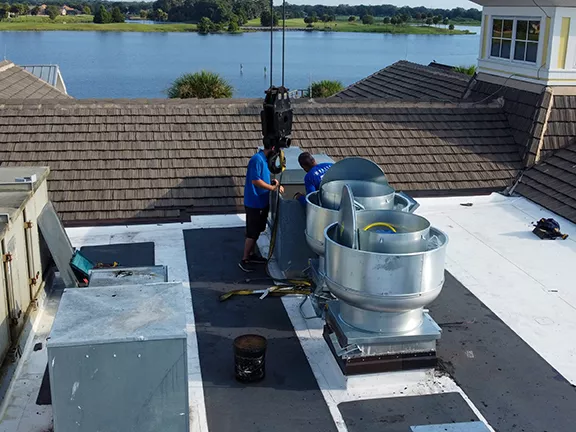
Whether your restaurant uses a rooftop air unit, a split system, variable refrigerant flow systems (VRF systems), or another type of commercial HVAC system, routine maintenance helps keep the equipment operating reliably.
Protect Your Restaurant with Planned HVAC Maintenance
A well-maintained HVAC system is about more than keeping customers comfortable.
Routine maintenance helps:
- Reduce unexpected repairs.
- Improve system reliability.
- Lower energy costs.
- Extend HVAC equipment life.
- Help maintain indoor air quality.
- Support a comfortable restaurant environment for customers and employees.
Whether you’re operating an established restaurant or planning a new restaurant, investing in preventative maintenance is one of the most cost-effective ways to protect your HVAC investment.
Schedule Restaurant HVAC Maintenance Before Problems Start
At United Refrigeration, Heating & Air, we recommend servicing restaurant HVAC systems six times per year to help prevent breakdowns, improve efficiency, and keep your restaurant operating comfortably throughout every season.
Many of our restaurant customers also choose to include their commercial refrigeration equipment in the same Commercial Maintenance Plan, giving them one trusted partner for both HVAC and refrigeration maintenance.
If you’re looking for dependable restaurant HVAC solutions designed to protect your business—not just fix problems after they happen—we’re here to help.
Call United Refrigeration, Heating & Air today to schedule service or learn more about our Commercial Maintenance Plans for restaurants throughout Central Florida.