
If you’ve been researching a new HVAC system, you’ve probably come across the term heat pump. You may have even heard an HVAC contractor recommend replacing your home’s heat pump when you thought you were shopping for a new air conditioner.
If that left you scratching your head, you’re not alone.
One of the biggest misconceptions homeowners have is believing that a heat pump and an air conditioner are completely different systems. Others assume a heat pump is a special energy-saving upgrade that replaces an entire HVAC system.
Neither is quite true.
Today, most new residential HVAC systems installed in Central Florida are heat pump systems because they provide both efficient cooling and heating in a single system. But a heat pump isn’t your entire HVAC system. It’s one important component working alongside your indoor equipment, thermostat, ductwork, and other parts to keep your home comfortable throughout the year.
Understanding what a heat pump does—and how it fits into your home’s HVAC system—can help you make more informed decisions the next time your heating and cooling equipment needs service or replacement.
"Wait... I Thought I Had an Air Conditioner."
Picture this.
It’s the middle of July, and your home isn’t staying cool.
You schedule an HVAC service call, and after inspecting the outdoor equipment, the technician says:
“Your heat pump has reached the end of its life.”
Your first thought is probably:
“Heat pump? I thought I had an air conditioner.”
It’s a conversation HVAC technicians have every day.
Most homeowners simply refer to the outdoor unit as “the AC.” That’s understandable because, for most of the year, its primary job is cooling your home.
But in many Florida homes, that outdoor unit is actually a heat pump.
The confusion comes from using three different terms interchangeably:
- HVAC system
- Air conditioner
- Heat pump
While they’re closely related, they aren’t the same thing.
Let’s clear that up.
What Is an HVAC System?
Before you can understand what a heat pump does, it helps to understand the complete HVAC system.
HVAC stands for Heating, Ventilation, and Air Conditioning.
Your HVAC system isn’t a single piece of equipment. It’s a collection of components that work together to keep your home comfortable year-round.
A typical residential HVAC system includes:
- Outdoor heat pump
- Indoor air handler
- Indoor evaporator coil
- Thermostat
- Refrigerant lines
- Air filter
- Condensate drain
- Electrical controls
- Ductwork that carries conditioned air throughout your home
Each component has a specific job.
The thermostat tells the system when to turn on.
The air handler circulates air through your home.
The ductwork delivers conditioned air to each room.
The filter helps keep dust and other airborne particles from circulating through the system.
And the heat pump is responsible for moving heat into or out of your home, depending on the season.
Although the outdoor unit often gets all the attention, every part of the HVAC system plays a role in your home’s comfort.
The Heat Pump Is Only One Part of the System
This is one of the most important ideas to understand.
A heat pump is not your HVAC system.
It’s one component within it.
Think of it as the outdoor unit that works together with the indoor equipment to heat and cool your home.
Without the indoor air handler, thermostat, refrigerant lines, and ductwork, the heat pump couldn’t do its job.
That’s why HVAC professionals evaluate the complete system rather than focusing only on the equipment outside your home.
What Is a Heat Pump?
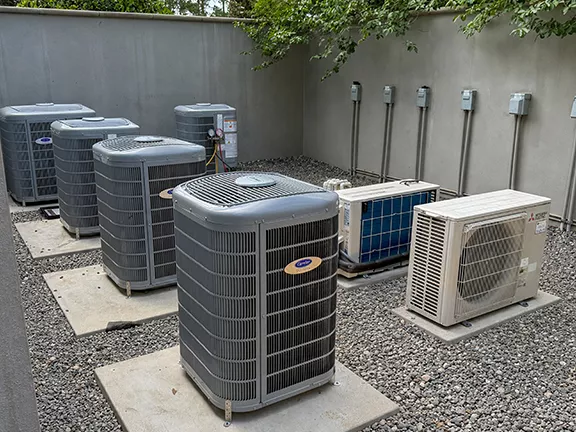
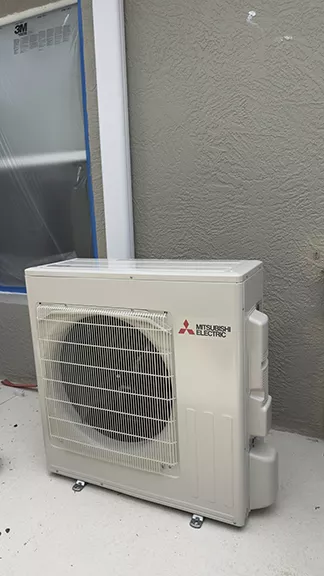
A heat pump is the outdoor unit found on many modern residential HVAC systems.
At first glance, it looks almost identical to what many homeowners call a central air conditioner.
That’s because during the summer, it performs the exact same function.
It removes heat from inside your home and releases it outdoors, allowing cool, conditioned air to circulate throughout your house.
Where a heat pump differs is what happens when the weather turns cooler.
Instead of only removing heat from your home, it can reverse the process and move heat from the outdoor air back inside.
That means the same piece of equipment can both cool your home during the summer and help heat your home during the winter.
This ability to provide both heating and cooling is one reason heat pumps have become so common throughout Florida.
How Does a Heat Pump Work?
The technology inside a heat pump is sophisticated, but the basic idea is surprisingly simple.
Its job is to move heat to wherever you don’t want it.
During the summer, that means removing heat from inside your home.
During the winter, it means bringing heat back inside.
Let’s look at each season separately.
Cooling Mode
When your thermostat calls for cooling, your heat pump works just like a central air conditioner.
Here’s a simplified version of what happens:
- Warm indoor air passes over the indoor coil.
- The refrigerant absorbs heat from that air.
- The heat travels through refrigerant lines to the outdoor heat pump.
- The outdoor unit releases the heat into the outside air.
- Cooler, drier air is circulated back through your home.
This cycle repeats until your desired indoor temperature is reached.
Heating Mode
When outdoor temperatures drop, the process reverses.
A component called a reversing valve changes the direction of refrigerant flow.
Instead of carrying heat out of your home, the system extracts heat from the outdoor air and transfers it indoors.
The heat pump simply moves that heat into your home, allowing the same system that kept you cool all summer to provide warmth during the winter.
That’s the biggest difference between a heat pump and a cooling-only outdoor unit.
The heat pump can operate in both directions.
Why Heat Pumps Are So Popular in Florida
Climate has a lot to do with why heat pumps are so common throughout Central Florida.
Unlike northern states that experience long periods of freezing weather, Florida enjoys relatively mild winters.
That makes heat pumps an excellent fit.
During the long cooling season, they operate just like a central air conditioner, efficiently removing heat and humidity from your home.
When cooler weather arrives, they simply reverse the process to provide comfortable indoor heating.
For many homeowners, that means one outdoor unit can handle both heating and cooling without the need for a separate gas furnace.
Another benefit is humidity control.
While people often focus on temperature, humidity plays a major role in how comfortable your home feels.
A properly operating HVAC system removes moisture from the indoor air while it’s cooling your home, helping reduce that sticky feeling many Floridians know all too well.
It’s important to remember, though, that humidity control isn’t determined by the heat pump alone. The performance of the indoor air handler, thermostat, airflow, and the overall design of the HVAC system all contribute to how comfortable your home feels.
Frequently Asked Questions
Is a heat pump the same as an HVAC system?
No.
A heat pump is one component of a complete HVAC system. The entire system includes the indoor air handler, thermostat, ductwork, refrigerant lines, electrical controls, air filtration, and other components that work together to heat and cool your home.
Is the heat pump the outdoor unit?
In most residential split systems, yes.
The heat pump is the outdoor unit connected to the indoor equipment through refrigerant lines.
Together, the indoor and outdoor components make up your home’s heating and cooling system.
Is a heat pump the same as an air conditioner?
Not exactly.
A heat pump cools your home the same way a traditional air conditioner does, but it also has the ability to reverse the refrigeration cycle and provide heat during cooler weather.
That’s why many homeowners don’t realize they already have a heat pump until an HVAC technician points it out.
Do heat pumps work well in Florida?
Yes.
Florida’s long cooling season and relatively mild winters make heat pumps an excellent choice for many homes.
They provide efficient cooling during the summer and dependable heating during cooler weather without requiring a separate furnace in most residential applications.
Does a heat pump remove humidity?
Yes.
When operating in cooling mode, a heat pump removes both heat and moisture from the indoor air, helping improve comfort during Florida’s humid summers.
Proper system sizing and installation also play an important role in humidity control.
How long does a heat pump last?
Most residential heat pumps provide many years of reliable service when they’re professionally installed and properly maintained.
Regular maintenance, changing your air filter, and scheduling routine inspections can help maximize the life of your HVAC system.
The Bottom Line
A heat pump isn’t a separate HVAC system. It’s one important part of it.
The outdoor unit sitting beside your home is designed to move heat—not create it. During the summer, it cools your home by removing heat and humidity from the indoor air. During the winter, it simply reverses the process to bring heat back inside.
That’s why today, most new residential HVAC systems installed in Central Florida are heat pump systems. They’re well suited to our climate because they provide efficient cooling and heating using the same outdoor equipment.
But the heat pump is only one piece of the puzzle.
Your home’s comfort also depends on the indoor air handler, thermostat, ductwork, airflow, filtration, and every other component working together as a complete HVAC system.
Understanding how those components work together makes it easier to have informed conversations with your HVAC contractor, ask better questions when it’s time for replacement, and make confident decisions about your home’s comfort.
At United Refrigeration, Heating & Air, we believe homeowners deserve clear, honest information—not confusing industry jargon. Whether you need routine maintenance, a system evaluation, or you’re planning to replace your home’s HVAC system, we’re here to answer your questions and help you understand your options.
Because when you understand how your HVAC system works, you’re in a much better position to choose the right solution for your home and