
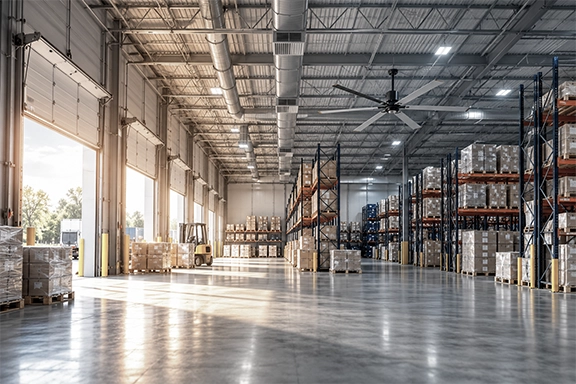
Your loading area feels warm, some storage aisles stay comfortable, and the thermostat says the building has reached its set point. Meanwhile, employees keep adjusting the controls without solving the problem.
Effective warehouse temperature control starts with understanding why conditions vary. Equipment performance, building layout, door activity, and stored-product requirements all influence the result.
Whether you manage a smaller storage building in Ocala or a large industrial facility elsewhere in Central Florida, persistent hot and cold spots deserve a closer look.
Why Does the Temperature in Your Warehouse Vary?
A warehouse space rarely experiences the same conditions throughout the building. Loading areas, upper storage levels, interior aisles, and enclosed offices can have different heating and cooling needs.
Common causes of uneven temperatures include:
- High ceilings: Warm air can collect above occupied areas, creating temperature differences between floor level and elevated inventory.
- Storage layouts: Pallet racking systems, stacked cartons, and newly added partitions can obstruct supply outlets or return paths.
- Loading doors: Frequent opening allows an inflow of outside air, adding heat and moisture during Florida’s cooling season.
- Building conditions: Roof exposure, insulation gaps, and air leaks can create localized heat gain.
- Equipment problems: Dirty components, duct leakage, control faults, or insufficient capacity can affect performance.
Changes in material handling, delivery schedules, or operating hours may also explain why a previously comfortable area now struggles. Regular warehouse HVAC maintenance helps identify equipment-related problems before they become larger disruptions.
Can Thermostat Placement and Temperature Zones Improve Control?
A thermostat measures conditions at its location. If it sits near a cool office corridor or supply outlet, its reading may not represent the surrounding air in the warehouse’s storage aisles.
Compare temperatures at representative locations and heights, especially where inventory or employees experience problems. Track readings during deliveries, afternoon heat, and different shifts to identify recurring temperature changes.
Separate temperature zones may help when different areas have distinct requirements, provided the equipment and controls support them. Simply adding thermostats will not correct poor distribution or inadequate capacity.
Measure temperature and humidity levels together. A space can reach its temperature setting while remaining too damp for stored materials. Our warehouse humidity control article explains why cooling and moisture management need attention together.
Which Improvements Can Help Correct Uneven Temperatures?
Controlling warehouse temperature requires matching the solution to the cause. The next step may involve maintenance, distribution changes, controls, or equipment upgrades.
Restore Equipment Performance and Airflow
Start with filters, coils, fans, and the air handling unit serving the affected area. Then evaluate duct condition, supply distribution, and return paths.
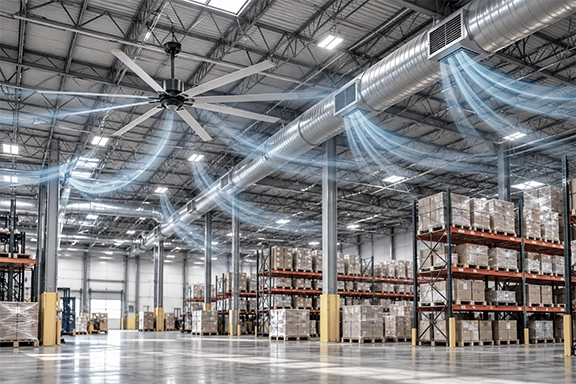
Fans can recirculate the air and reduce temperature differences in some spaces, but they do not remove heat or moisture by themselves. Moving more air is only helpful when it supports the building’s requirements.
Review Doors, Ventilation, and Seasonal Heating
Damaged dock seals and doors left open unnecessarily increase the load on cooling equipment. Exhaust and replacement air should also be evaluated together, including the makeup air unit where installed.
Warehouse space heating deserves a seasonal review too. Where unit heaters are installed, their placement, controls, and interaction with the main heating system should be checked to avoid uneven conditions.
Evaluate Capacity and Distribution Together
A larger system will not necessarily solve a poorly served aisle. United’s commercial heating and cooling services include options for repairs, replacement equipment, and controls.
For example, our 20-ton system replacement at an Ocala fitness facility combined new equipment with corrected duct distribution to address uneven cooling. Although this was a fitness facility, it illustrates why equipment and air delivery should be assessed together.
Before investing in larger equipment, compare your warehouse HVAC repair, replacement, and upgrade options to understand when airflow improvements may be enough and when replacement deserves consideration.
How Is Cold Storage Warehouse Temperature Control Different?
A temperature-controlled building and a cold storage warehouse serve different needs. Products that must remain chilled or frozen require suitable refrigeration, insulation, controls, and operating procedures.
Within a cold storage facility, door activity, incoming product temperatures, loading patterns, and defrost operation can affect conditions. Cold air at one sensor does not establish that every product is at its required temperature.
Cold chain operations depend on maintaining product-specific conditions throughout storage and movement within the supply chain. Monitoring locations, alarm settings, and response procedures should reflect those requirements.
Facilities that refrigerate inventory need an assessment appropriate to their equipment. United’s walk-in cooler and freezer services support businesses managing refrigerated spaces. General warehouse cooling settings should not be substituted for cold storage requirements.
What Can Warehouse Managers Do Before a Service Visit?
Good warehouse management includes documenting conditions before they interrupt operations. These best practices give technicians useful information:
- Record where problems occur, when they develop, and actual temperature readings.
- Note changes to racking systems, inventory, equipment, or operating hours.
- Identify affected units and share previous service reports.
- Keep supply outlets, returns, and equipment access clear.
- Provide the storage requirements for temperature-sensitive products.
Tracking these details can help control costs by making diagnosis more focused. Correcting unnecessary door exposure, poor distribution, or inappropriate schedules may also reduce energy consumption. Actual energy savings depend on the problems found and the work performed.
Frequently Asked Questions
Will Lowering the Thermostat Fix Warehouse Hot Spots?
Not necessarily. A lower setting may overcool areas already receiving enough conditioned air while leaving the problem area warm. Investigate distribution, controls, building conditions, and equipment performance first.
Can Circulation Fans Replace Air Conditioning?
Fans move air and may improve comfort or temperature mixing. They cannot replace equipment needed to remove heat and moisture or maintain specific product storage conditions.
Does an Unevenly Cooled Warehouse Need a Larger System?
Only an assessment can establish that. Restricted air paths, duct problems, door activity, and control issues may explain the symptoms. Capacity should be evaluated against the building’s actual load and operating requirements.
Improve Warehouse Temperature Control in Central Florida
Persistent hot spots, inconsistent storage conditions, or rising operating costs deserve more than another thermostat adjustment.
United Refrigeration, Heating & Air provides storage facility HVAC services for Central Florida businesses, including maintenance, repairs, controls, and equipment replacement.
Request a warehouse temperature-control assessment to discuss your facility’s conditions and practical next steps.