
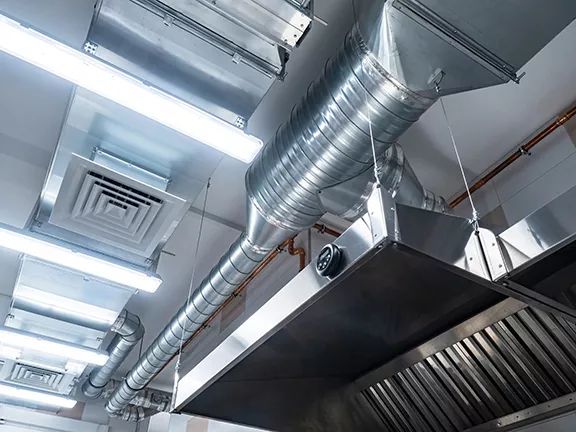
If you’re replacing an aging HVAC system, remodeling an existing restaurant, or planning a new location, choosing the right equipment can have a major impact on comfort, energy costs, and daily operations.
So, what is the best HVAC system for restaurants?
There isn’t one system that’s right for every restaurant.
The best solution is a properly designed combination of heating and cooling, ventilation, kitchen exhaust, make-up air, humidity control, and zoning based on how your restaurant actually operates.
A well-designed restaurant HVAC system should accomplish six things:
- Keep customers comfortable.
- Provide better working conditions for employees.
- Control Florida humidity.
- Replace exhausted kitchen air correctly.
- Maintain proper air balance.
- Control energy use without sacrificing comfort.
Choosing the equipment is important. Making sure all these systems work together is even more important.
What Makes Restaurant HVAC Different?
Restaurants have unique HVAC requirements compared with most commercial spaces.
Your dining area may be filled with customers while the kitchen generates tremendous heat from cooking equipment. At the same time, exhaust fans are removing large amounts of air from the building while exterior doors repeatedly introduce warm, humid outdoor air.
Your restaurant HVAC must manage all of it.
That means HVAC systems in restaurants shouldn’t be selected based on square footage alone. Kitchen heat loads, occupancy, ventilation, humidity, exhaust, building layout, and operating hours all influence the amount of heating and cooling the restaurant requires.
The Best HVAC System for Restaurants Starts with Proper Sizing
Bigger isn’t necessarily better.
An undersized HVAC system may run constantly while struggling to maintain temperature. That can increase energy costs, accelerate equipment wear, and leave the dining space uncomfortable.
But an oversized system creates different problems.
Oversized air conditioning equipment can cool the building quickly and shut off before running long enough to adequately remove moisture. In Florida, that can leave your restaurant cool but humid.
Proper HVAC sizing considers factors such as:
- Restaurant square footage and layout
- Customer and employee occupancy
- Kitchen heat load
- Cooking equipment
- Exhaust requirements
- Outdoor air requirements
- Building construction and insulation
- Florida heat and humidity
- Hours of operation
The right HVAC system starts with understanding the building and operation before selecting the equipment.
Restaurant HVAC Needs the Right Temperature Zones
The kitchen and dining room perform completely different jobs, so expecting one thermostat or HVAC zone to keep both comfortable can create problems.
Different areas of the restaurant may have different HVAC needs, including:
- Dining areas
- Kitchens
- Bars
- Private dining rooms
- Entry areas
- Offices
- Back-of-house spaces
A zoned HVAC approach can provide better temperature control by allowing different parts of the building to respond to their individual cooling demands.
Depending on the restaurant, this might involve multiple rooftop units, commercial split systems, ductless systems, or another HVAC design.
The goal isn’t simply to produce more cold air. It’s to deliver the right amount of conditioned air to the areas that need it.
Kitchen Exhaust and Make-Up Air Must Work with Your HVAC
You can install an excellent new air conditioning system and still have an uncomfortable restaurant if the exhaust and make-up air systems aren’t properly balanced with the HVAC system.
A restaurant kitchen produces heat, smoke, moisture, cooking odors, and grease-laden air. Kitchen exhaust systems and exhaust fans are designed to capture these contaminants and remove them from the building.
But every cubic foot of exhaust air leaving the restaurant has to be accounted for. That’s where make-up air and the overall HVAC design come into play.
In a properly balanced restaurant, the kitchen should typically operate at a slight negative pressure compared with the surrounding dining and customer areas. This encourages air—and the odors and contaminants it may carry—to move from the cleaner areas of the restaurant toward the kitchen, where the kitchen hood and exhaust system can remove it.
At the same time, the building as a whole should generally remain positively pressurized compared with the outdoors. This helps prevent hot, humid outside air from being pulled uncontrollably through exterior doors, cracks, and other openings.
When that balance is lost, restaurants can experience:
- Cooking odors migrating into the dining area
- Hot and uncomfortable kitchens
- Excessive Florida humidity entering the building
- Doors that are difficult to open or don’t close properly
- Higher energy use
- Poor temperature and humidity control
- Reduced HVAC performance
Getting this right requires more than simply installing a larger air conditioner or adding more exhaust. The HVAC system, kitchen exhaust, make-up air units, and outdoor air requirements need to work together to maintain the correct air balance throughout the restaurant.
The takeaway is simple: don’t choose an HVAC system for your restaurant without considering kitchen exhaust, make-up air, and building pressure as part of the complete HVAC design.
Florida Restaurants Need Serious Humidity Control
In Central Florida, cooling the restaurant is only half the job.
The HVAC system also needs to manage moisture.
A thermostat might show 72 degrees while customers still complain that the restaurant feels sticky or humid. That’s because temperature control and humidity control aren’t the same thing.
Effective restaurant HVAC design needs to consider:
- Equipment sizing
- System runtime
- Outdoor air
- Make-up air
- Air balance
- Ventilation
- Indoor humidity levels
- Dehumidification when necessary
An oversized system, poorly balanced ventilation, or excessive outside air can make humidity difficult to control regardless of the thermostat setting.
The best HVAC solutions for restaurants in Florida need to address both temperature and humidity.
Indoor Air Quality Should Be Part of the HVAC Design
Restaurant HVAC isn’t only about heating and cooling.
Proper ventilation and indoor air quality contribute directly to the dining experience.
Cooking produces odors, grease particles, heat, and moisture. At the same time, restaurants need adequate fresh air circulation for guests and staff.
A properly designed system may use air filters, ventilation systems, exhaust, make-up air, and controlled outdoor air to help maintain indoor air quality while controlling restaurant odors.
The objective is balance: remove unwanted kitchen contaminants while supplying appropriate fresh air without overwhelming the air conditioning system.
What Type of HVAC System Is Best for Your Restaurant?
Several types of commercial HVAC equipment can work well in restaurants. The right choice depends on the building, kitchen, layout, budget, and HVAC requirements.
Rooftop or Packaged Commercial HVAC Systems
Packaged rooftop units are common in standalone restaurants and many commercial buildings.
Multiple rooftop units can provide separate zones while keeping much of the HVAC equipment outside the occupied space. They’re also generally accessible for maintenance and service.
Commercial Split Systems
A commercial split air conditioning system may make sense when rooftop equipment isn’t practical or the building layout requires a different approach.
Split systems separate indoor and outdoor components and can serve specific areas or zones within the restaurant.
Ductless Mini-Split Systems
Ductless systems can be effective for offices, additions, problem areas, or spaces requiring independent temperature control.
They’re often useful as a targeted solution rather than the primary HVAC system for an entire full-service restaurant.
VRF and Advanced Zoned Systems
Variable refrigerant flow systems can provide precise zoning and potentially strong energy efficiency for certain applications.
However, advanced technology isn’t automatically the best answer. Equipment cost, serviceability, restaurant layout, operating requirements, and long-term maintenance should all be considered.
The best system for a restaurant is the one designed around that restaurant—not simply the newest technology.
Energy-Efficient HVAC Is About More Than an Efficiency Rating
High-efficiency equipment can reduce operating costs, but an efficiency rating alone doesn’t guarantee an efficient restaurant.
An energy-efficient HVAC strategy also depends on:
- Correct equipment sizing
- Proper airflow
- Balanced exhaust and make-up air
- Clean coils and filters
- Proper ductwork
- Effective controls
- Regular maintenance
Even energy-efficient HVAC systems can waste energy if they’re fighting excessive outdoor air, dirty coils, poor air balance, or incorrectly designed ventilation.
System performance is what ultimately determines your real-world energy costs.
Don’t Forget What Happens After Installation
Even the best restaurant HVAC system needs regular maintenance.
Restaurant environments expose HVAC equipment to grease, cooking particles, airborne flour, moisture, and long operating hours. These contaminants can accumulate on coils and other components, restricting airflow and reducing efficiency.
That’s one reason United Refrigeration, Heating & Air recommends servicing restaurant HVAC systems six times per year.
Regular maintenance allows HVAC professionals to clean equipment, identify developing problems, verify system performance, and address
Restaurant HVAC Buying Checklist
Before selecting new HVAC equipment, ask your contractor:
- Has the restaurant’s actual heating and cooling load been evaluated?
- Are the kitchen and dining areas properly zoned?
- Has kitchen exhaust been included in the HVAC design?
- Is make-up air properly sized and balanced?
- How will the system control Florida humidity?
- How much outdoor air will enter the building?
- Can the existing ductwork provide the required airflow?
- Which energy-efficient options make financial sense?
- How accessible is the equipment for future service?
- What maintenance will the system require after installation?
If these questions aren’t being discussed, you’re probably talking about equipment—not a complete restaurant HVAC solution.
Get the Right HVAC System for Your Restaurant
Choosing the best HVAC system for restaurants isn’t about finding one particular brand, efficiency rating, or type of air unit.
It’s about designing a system around your restaurant.
United Refrigeration, Heating & Air can evaluate your cooling requirements, dining and kitchen areas, kitchen exhaust, make-up air, ventilation, humidity control, airflow, ductwork, and existing HVAC equipment to recommend a practical solution for your operation.
Whether you’re replacing an aging HVAC unit, upgrading an existing restaurant, or planning HVAC for a new restaurant, our commercial team can help you choose a system designed for comfort, efficiency, reliability, and long-term serviceability.
Planning a restaurant HVAC replacement or new project? Call United Refrigeration, Heating & Air today to discuss the right HVAC system for your restaurant or request a Commercial HVAC quote.